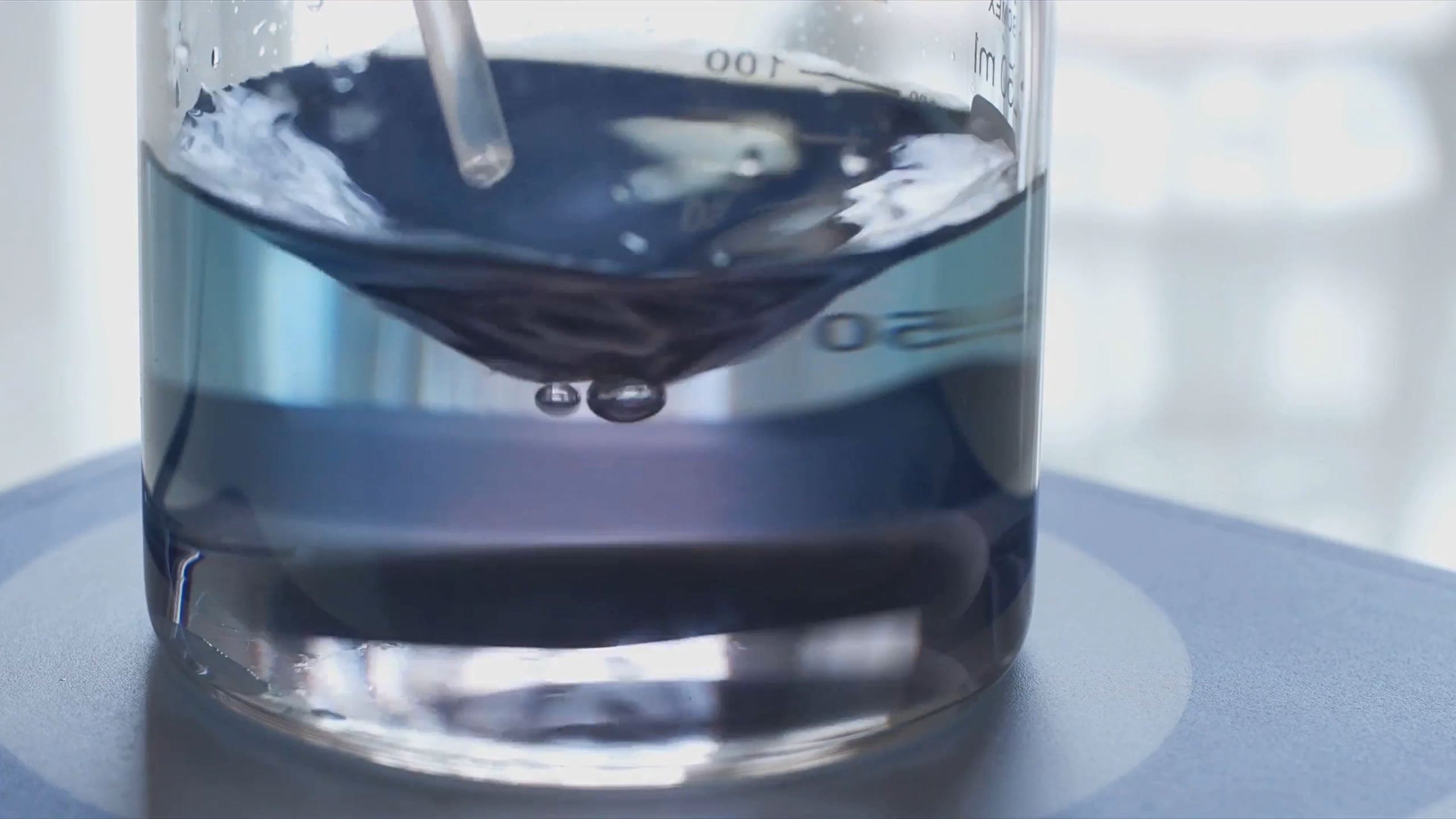
Ionic liquids (ILs) are a class of salts that exist in a liquid state at room temperature or near room temperature, primarily composed of cations and anions. Compared to traditional solvents, ionic liquids exhibit unique properties, which have drawn significant attention across various fields due to their “low volatility, high thermal stability, strong solvent capacity, and good conductivity.”
Key Applications of Ionic Liquids (ILs)
- Electrochemical Applications
- Batteries: ILs are used as electrolytes in energy storage devices like lithium-ion batteries and supercapacitors, offering high conductivity and a wide electrochemical window.
- Electrochemical Sensors: As electrolytes in sensors, ionic liquids enhance sensitivity and stability, making them valuable in various electrochemical applications.
- Material Science
- Synthesis of New Materials: ILs play a role in synthesizing nanomaterials, polymers, and composites, which help improve material properties.
- Surface Treatment: They are also employed in cleaning, coating, and treating metal surfaces, improving corrosion resistance and other surface characteristics.
- Separation and Extraction
- Extraction: ILs can selectively extract metal ions or organic compounds from complex mixtures, such as removing heavy metals from wastewater.
- Separation Processes: They are applied in gas and liquid separation processes, where ionic liquids can adsorb or dissolve specific target substances effectively.
- Energy and Environmental Applications
- Carbon Capture: ILs demonstrate excellent adsorption capabilities in capturing and separating greenhouse gases.
- Waste Treatment: They show potential in treating wastewater and other forms of environmental remediation by aiding in the removal of pollutants.
Industrial Applications of ILs
- Dissolving Cellulose
Ionic liquids are used to selectively dissolve cellulose while preserving cellulose nanocrystals as a reinforcing phase. This allows for nano-level enhancement of low-quality cellulose, making it stronger and more functional. Additionally, the introduction of high molecular weight cellulose further strengthens the entanglement network of cellulose chains, resulting in molecular-level enhancement.
- Antistatic Agents
In industries such as electronics, integrated circuits, and battery production, ionic liquids can serve as antistatic coatings or additives, preventing static electricity from damaging products. Some ionic liquids are also added to plastics or films to create antistatic packaging materials, providing protection for sensitive devices.
- Electrolyte Additives for Batteries
Ionic liquids, due to their freely mobile ions, exhibit excellent conductivity, improving the performance of batteries. Their low volatility also reduces the risk of fire and explosion, especially in high-temperature environments.
- Lithium-Ion Batteries: Ionic liquids used as electrolytes enhance the cycling stability and energy density of lithium-ion batteries.
- Supercapacitors: In supercapacitors, ionic liquids serve as electrolytes to increase energy and power density.
- Fuel Cells: Some specific ionic liquids can be employed in proton exchange membrane fuel cells to boost performance and efficiency.
Available Products
Watson currently produces a range of ionic liquids including BMIMCL, BMIMBF4, BMIMPF6, BMIMNTF2, MBIMBr, BMIMHSO4, EMIMCL, EMIMDCA, , and Cl. These are widely applied in the fields mentioned above. If you have other specific requirements, please feel free to contact us for further discussion by ils@watson-int.com. https://www.watson-int.com/exploring-the-diverse-applications-and-industrial-potential-of-ionic-liquids-ils/
Comments
Post a Comment