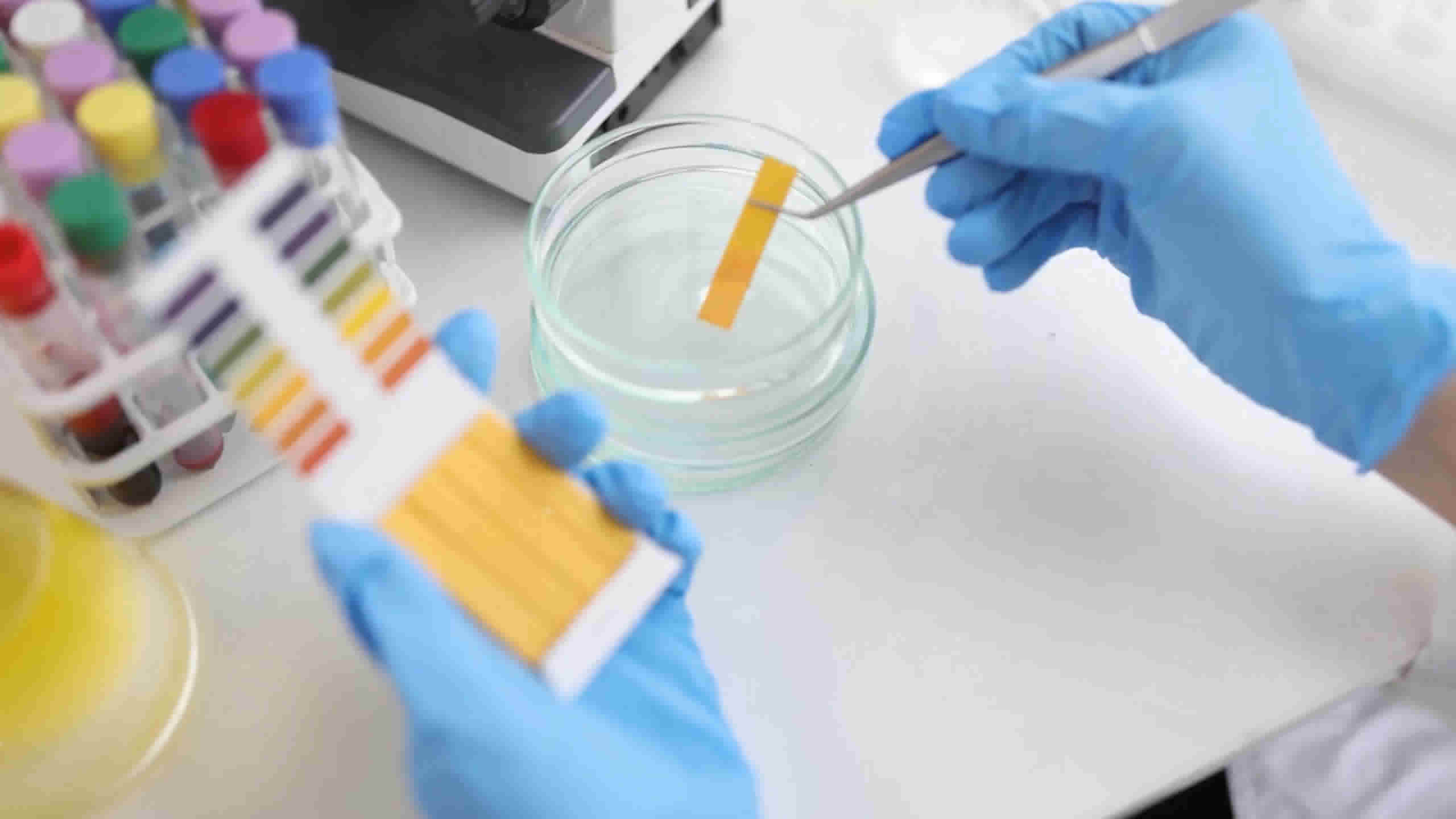
Applications of Tris Buffer
Tris Buffer (Tris(hydroxymethyl)aminomethane) is a widely used buffer in biochemistry and molecular biology due to its versatile applications. Below are its main uses and advantages:
1. pH Stabilization in Biological Reactions
- Enzyme Reactions: Tris Buffer ensures a stable pH environment, maintaining enzyme activity and functionality during biochemical processes.
- Protein Studies: It prevents protein denaturation or aggregation caused by pH fluctuations, making it essential for protein purification and analysis.
2. Electrophoresis
- DNA/RNA Electrophoresis: Tris, when combined with acetate (TAE) or borate (TBE), serves as a buffer for gel electrophoresis, facilitating the uniform migration of nucleic acids under an electric field.
- Protein Electrophoresis (SDS-PAGE): It is a critical component in running and transfer buffers, ensuring optimal separation and transfer of proteins.
3. Cell and Tissue Culture
In cell and tissue culture, Tris Buffer is often incorporated into media to maintain extracellular pH stability, supporting healthy cell growth and metabolic activities.
4. Nucleic Acid and Protein Solubilization
- DNA/RNA Extraction: Tris Buffer is used to dissolve and stabilize nucleic acids, protecting them from degradation in acidic or alkaline conditions.
- Protein Preparation: It provides a stable environment during protein solubilization and storage, preventing degradation or loss of activity.
5. Immunological Assays
In applications like Western Blotting or ELISA, Tris-based buffers (e.g., TBST with Tween-20) are commonly used for washing, blocking, or antibody dilution, ensuring consistent and reliable results.
6. Custom Buffer Systems
Tris is highly adaptable and can be combined with other reagents to create specific buffer systems:
- Tris-HCl: A standard buffer for a wide range of applications.
- TBS (Tris-Buffered Saline): Widely used in immunology experiments.
Key Features of Tris Buffer
- Wide Buffering Range: Effective in the pH range of 7.0–9.0, making it suitable for many biological systems.
- Temperature Sensitivity: Tris’s pKa (~8.1) is temperature-dependent, allowing precise pH adjustments for specific experimental conditions.
- Compatibility: Works well with nucleic acids, proteins, and various biochemical reactions.
ChemWhat: The Global Leader in Tris Buffer Supply
ChemWhat stands as the world’s largest brand of Tris Buffer, dominating the market with unparalleled production capacity and cost advantages.
Why Choose ChemWhat for Tris Buffer?
- Absolute Price Advantage: ChemWhat’s scale of operations enables it to offer the most competitive prices in the market without compromising on quality.
- Massive Production Capacity: With cutting-edge manufacturing facilities and rigorous quality control, ChemWhat ensures a consistent and reliable supply to meet the demands of laboratories and industries worldwide.
- Global Reach: ChemWhat’s extensive distribution network ensures timely delivery, whether for research labs, pharmaceutical companies, or large-scale industrial applications.
Tris Buffer is indispensable in a wide range of biochemical and molecular biology applications. ChemWhat’s unmatched expertise, production scale, and cost efficiency make it the ideal partner for sourcing Tris Buffer at any scale, from research-grade to industrial-grade requirements.
Sales Link:
Tris Buffer CAS: 77-86-1 on Watson
#IVD https://www.fcad.com/tris-buffer-the-indispensable-tool-for-biochemical-research-why-chemwhat-brand-leads-the-global-market/
Comments
Post a Comment